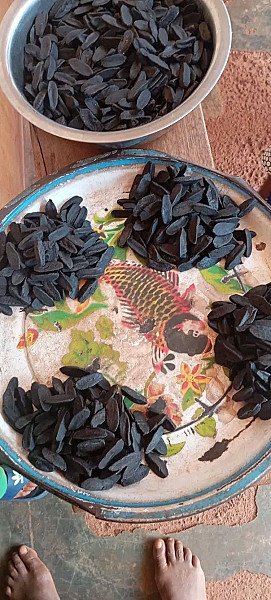
Okpeye Nsukka is the traditional seasoning of the Nsukka people in Enugu State, Nigeria. It is made from the fermented seeds of the African locust bean tree known scientifically as Prosopis africana, commonly called the iron tree. This hardy tree grows across Northern Sub-Saharan Africa, and the Middle Belt region of Nigeria is among the areas where it thrives abundantly. It grows particularly well in Nsukka area of Enugu State and is also produced in large quantities in Kogi and Benue States.
When used as seasoning in soups and meals, Okpeye gives a deep, rich, and lasting flavour that enhances the overall taste of food. It blends exceptionally well with Ofe Ohoyi, the traditional Ogbono soup of Nsukka people. It also complements other soups such as Egusi, Ofe Ukpo, Ofe Ede, Ofe Onugbu, and many others. In ancient times, Nsukka people relied on Okpeye as their primary seasoning, using it not only in soups but also in rice dishes, yam pottage, boiled yam, and traditional beans.
Okpeye Nsukka is cherished for its distinct aroma and unforgettable taste. Unlike many modern-day seasonings that contain artificial additives, Okpeye is regarded as a more natural and traditional alternative. Its bold flavour, cultural value, and nutritional richness have made it an enduring symbol of Nsukka culinary heritage.
History of Okpeye
Okpeye is widely used across parts of West Africa. In Nigeria, however, it is more commonly associated with the Igala people of Kogi State, the Idoma people of Benue State, and the Igbo people of Nsukka area in Enugu State. Though the exact origin of its use cannot be fully traced, it is clear that the seasoning has existed for generations and has become deeply rooted in the food culture of these communities.
Through trade, migration, and intermarriage, knowledge of producing and using Okpeye spread among neighboring ethnic groups. Over time, each group developed slight variations in preparation methods and names. For instance, while the Nsukka people call it Okpeye, others may refer to it as Okpehe.
Today, Okpeye remains a valued traditional condiment in these regions. Okpeye Nsukka, in particular, is highly regarded among the Igbo people for its strong flavour profile and cultural significance. It continues to be passed down from one generation to another as part of indigenous culinary knowledge.
How Okpeye Nsukka is made
Different cultures and locations have their distinct methods of preparing Okpeye or Okpehe. However, the Nsukka people have a unique and detailed traditional process that has been preserved over time.
- The Okpeye seeds are harvested from the Prosopis africana tree and carefully sorted. Dirt, stones, and unwanted particles are removed to ensure cleanliness.
- The cleaned seeds are placed in a large pot, water is added, and they are cooked for a prolonged period, usually between 12 and 24 hours. In many homes, the seeds are left to cook overnight to soften properly. This long cooking time helps to break down the hard seed coat.
- After the initial cooking, the seeds are further processed. The softened outer shells are removed carefully, leaving only the inner cotyledons.
- The dehulled seeds are boiled again to ensure they are thoroughly softened and ready for fermentation.
- The softened seeds are then placed in a clean container or pot, covered properly, and allowed to ferment naturally for about 5 to 8 days. During fermentation, natural microorganisms act on the seeds, transforming them both in flavour and colour. At the end of this process, the seeds turn black or dark brown and develop their characteristic strong aroma.
- After fermentation, the seeds are ground into a thick paste using a local grinding stone or mechanical grinder.
- The paste is molded into small balls or flat shapes and placed under the sun for several days to dry thoroughly. Proper drying is essential to prevent spoilage and extend shelf life.
- Once fully dried and firm, the Okpeye is ready for use in soups and other meals.
This traditional method, though time-consuming, ensures the authenticity, taste, and quality that distinguish Okpeye Nsukka from other fermented seasonings.
Nutritional and Health Benefits of Okpeye Nsukka
Okpeye Nsukka is not just valued for its flavour but also for its nutritional benefits. Being derived from fermented seeds, it is rich in plant-based protein, essential amino acids, and beneficial microorganisms produced during fermentation. These nutrients help support body growth, tissue repair, and overall health.
The fermentation process also enhances digestibility and may improve gut health by introducing beneficial bacteria. Okpeye contains minerals such as iron, calcium, and phosphorus, which are important for blood formation, bone strength, and energy production.
Because it is traditionally produced without chemical preservatives or artificial additives, many people consider it a healthier alternative to highly processed seasoning cubes. When consumed in moderation as part of a balanced diet, Okpeye contributes both taste and nourishment to meals.
Concerns about the Dying Okpeye Tree
Despite its cultural and culinary importance, there are growing concerns about the decline of the Prosopis africana tree. The tree is highly valued for its strong, durable wood, which is widely used for furniture making, construction, and especially charcoal production. Because of its excellent wood quality, many trees are cut down primarily for timber and coal rather than for seed harvesting.
This increasing demand for wood has led to overexploitation, making the tree increasingly scarce in some areas. If this trend continues without sustainable replanting and conservation efforts, the availability of seeds for Okpeye production may reduce significantly.
The potential disappearance of the tree would not only affect food culture but also threaten biodiversity and the livelihoods of local producers who depend on Okpeye production. There is therefore a need for awareness, tree planting initiatives, and sustainable harvesting practices to preserve this important indigenous resource for future generations.


Comments (0)
No comments yet. Be the first to comment!
Leave a Comment